10 Signs Your Hormones May Be Blocking Your Health & Weight Goals

Many people do everything right—eat less, exercise regularly, follow structured plans—yet their bodies refuse to respond.
If this sounds familiar, the problem may not be discipline or calories.
It may be hormonal signals working against your efforts.
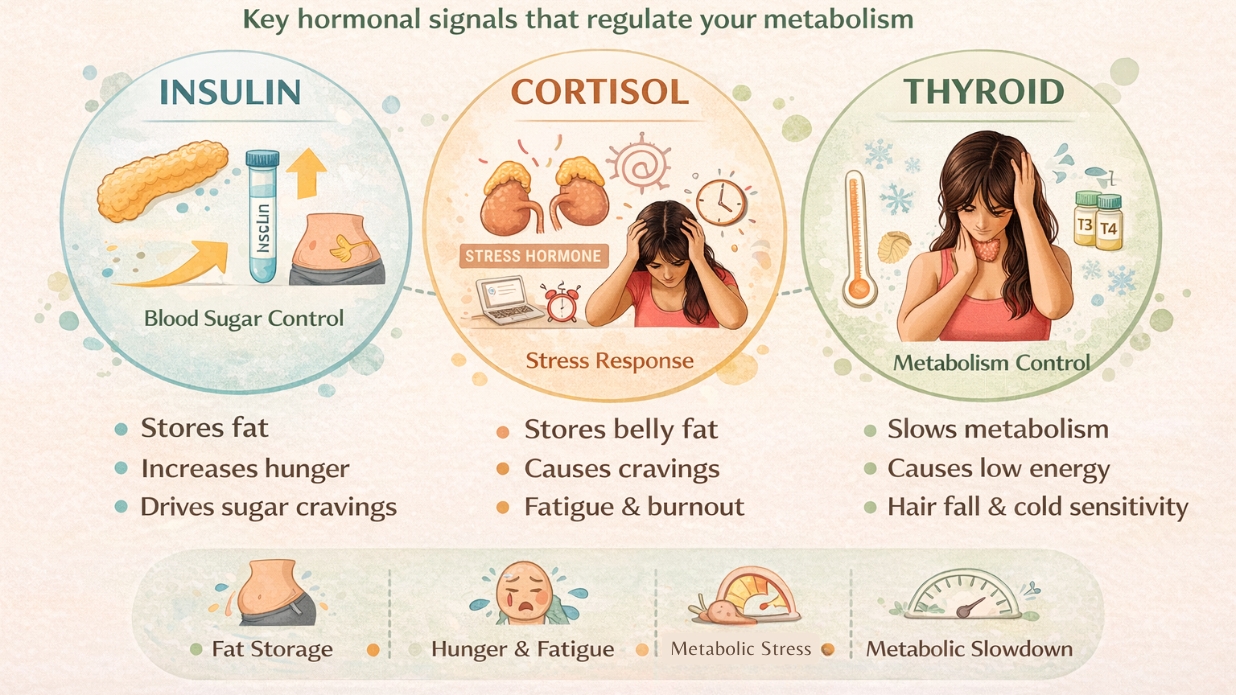
Hormones regulate how your body burns fat, stores energy, controls hunger, and manages stress. When these signals are disrupted, restriction alone often backfires.
Below are 10 common signs your hormones need attention, not further restriction.
1. Eating Less but Not Losing Weight
Chronic calorie restriction increases cortisol (stress hormone) and lowers thyroid activity, slowing metabolic rate.
Instead of burning fat, the body enters survival mode, conserving fat and holding onto weight.
2. Fat Is Stubborn Around the Belly
Persistent abdominal fat is commonly linked to:
- Insulin resistance
- High cortisol
This type of fat is hormonal, not simply dietary, and does not respond well to extreme workouts.
3. Feel Tired Even After Proper Sleep
Waking up tired even after 7–8 hours of sleep may signal:
- Low active thyroid hormone (T3)
- Iron or vitamin B12 deficiency
- Poor cortisol rhythm
Fatigue is a metabolic signal, not laziness.
4. Frequent Sugar or Carb Cravings
Strong cravings often indicate a blood sugar imbalance.
Repeated insulin spikes increase fat storage, worsen hunger cycles, and make consistency harder.
5. Irregular Periods or PMS Symptoms
Hormonal imbalances involving estrogen, progesterone, and insulin frequently show up as:
6. Difficulty Losing Weight After 30
With age:
- Muscle mass declines
- Thyroid efficiency reduces
- Insulin sensitivity decreases
Old dieting strategies stop working unless hormonal support is prioritised.
7. Digestive Issues or Constant Bloating
Gut health directly affects hormone regulation, including:
- Estrogen clearance
- Thyroid hormone conversion
- Blood sugar stability
A bloated gut often reflects a dysregulated metabolism.
8. Mood Swings, Anxiety, or Low Motivation
Hormones influence brain chemistry.
Imbalances in cortisol, estrogen, or thyroid hormones can drive:
- Emotional eating
- Anxiety
- Burnout
9. Hair Fall, Dry Skin, or Sensitivity to Cold
These are classic signs of:
- Thyroid dysfunction
- Micronutrient deficiencies
Such symptoms often appear before lab values become abnormal.
10. Weight Loss Starts—Then Suddenly Stops
Initial weight loss followed by a quick plateau often means the body is adapting defensively.
This is common when hormones are not addressed alongside nutrition.
Why Calories Alone Don’t Fix This
The body responds to signals, not just food quantity.
Hormones determine:
- Whether calories are burned or stored
- How hungry do you feel
- How efficiently metabolism functions
True healing requires regulation, not restriction.
What Helps Restore Hormonal Balance Naturally
A hormone-supportive approach focuses on:
- Adequate protein and fibre
- Stable meal timing
- Micronutrient correction
- Stress and sleep regulation
- Gut health support
- Targeted hormone testing when required
This is why structured, hormone-aware programs work better than short-term diets.
Here are some hormone-friendly recipes:

Nutrition plays a powerful role in hormonal balance when meals are designed to stabilise blood sugar, support gut health, and reduce stress hormones.
Explore these clinically aligned, hormone-friendly recipes:
- Gut-Healing Lunch Bowl (Thyroid & PCOS Friendly)
- Hormone-Friendly Millet Ladoo
- Hormone-Friendly Roasted Makhana Snack
If your body is resisting change, it is communicating—not failing.
Listening to hormonal signals is often the missing link in sustainable weight loss, metabolic healing, and long-term health.
If you’re tired of starting over every few weeks, it’s time for a plan that works with your body.
The 100-Day Transformation Program provides step-by-step, hormone-aware guidance to help reverse metabolic resistance, improve digestion, and achieve sustainable fat loss—without extreme dieting or burnout. When your hormones are aligned, your body finally cooperates.